

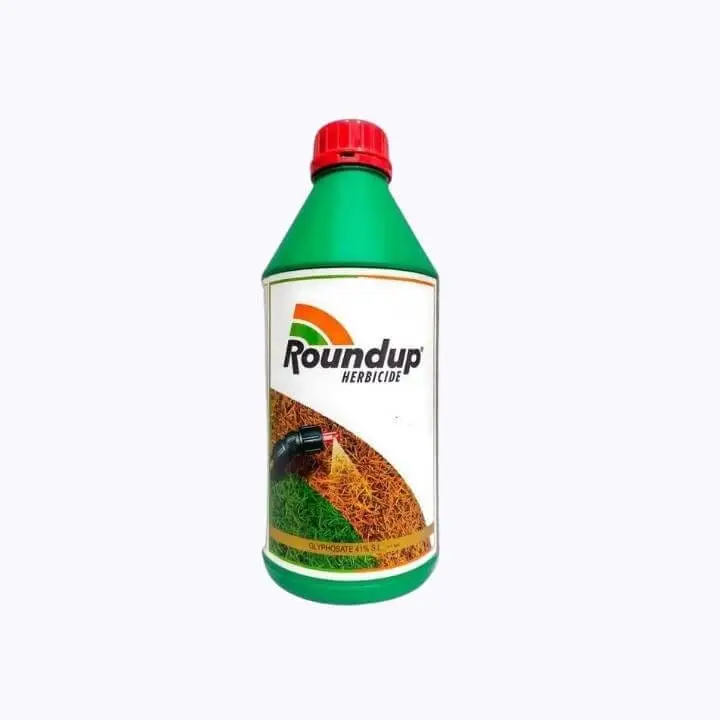


Bayer Roundup Herbicide – Glyphosate 41% SL
Bayer Roundup Herbicide is a broad-spectrum, non-selective systemic weed killer containing Glyphosate 41% SL. It effectively controls annual and perennial grasses, broadleaf weeds and difficult-to-kill weeds. Roundup is suitable for label-approved applications in tea plantations, non-cropped areas and pre-plant weed management in paddy fields.
Product Details
- Brand: Bayer
- Product Name: Roundup Herbicide
- Technical Name: Glyphosate 41% SL
- Formulation: Soluble Liquid (SL)
- Category: Herbicide / Weed Killer
- Herbicide Type: Non-Selective, Systemic
- HRAC Group: 9
- Mode of Action: EPSPS Inhibitor
- Application Method: Directed Foliar Spray
- Manufacturer: Bayer CropScience
Key Benefits of Bayer Roundup Herbicide
- Broad-Spectrum Weed Control: Controls many annual and perennial weeds.
- Systemic Action: Moves through treated weeds to affect roots and growing tissues.
- Effective on Tough Weeds: Helps control difficult perennial grasses.
- Post-Emergence Activity: Works on emerged, actively growing weeds.
- Versatile Weed Management: Suitable for label-approved plantation and non-crop applications.
Recommended Uses and Target Weeds
- Tea Plantations: Bermuda grass, cogon grass and other recommended weeds.
- Non-Cropped Areas: Annual and perennial grasses and broadleaf weeds.
- Paddy (Pre-Plant Application): Jungle rice, cockspur grass, rice flat sedge and other listed weeds before crop planting.
Bayer Roundup Dosage and Application
- Tea Plantations: 1000–1200 ml per acre.
- Non-Cropped Areas: 1000–1200 ml per acre.
- Paddy (Pre-Plant): 1000 ml per acre, before planting only.
- Water Volume: Approximately 200 litres per acre.
- Application Method: Directed foliar spray on actively growing weeds.
Important: Roundup is non-selective and can damage crops and desirable plants. Never spray directly on standing paddy or other sensitive crops. Follow the current product label and applicable local regulations.
How Bayer Roundup Works
Roundup contains Glyphosate, a systemic herbicide that inhibits the EPSPS enzyme. This disrupts the production of essential aromatic amino acids, preventing normal weed growth and gradually causing the treated weeds to die.
Frequently Asked Questions
Q1. What is Bayer Roundup Herbicide used for?
Roundup is used for controlling grasses, broadleaf weeds and perennial weeds in approved plantation, non-cropped and pre-plant applications.
Q2. What is the dosage of Bayer Roundup per acre?
Commonly published recommendations are 1000–1200 ml per acre for tea plantations and non-cropped areas. Always follow crop-specific label directions.
Q3. Can Roundup be sprayed on standing paddy?
No. Roundup is a non-selective herbicide that can seriously damage standing paddy. Its paddy use is limited to approved pre-plant applications.
Similar Products
Best Selling

Customer Reviews
Recent Reviews
Home delivery ka experience accha raha.
Quality is good, I am satisfied.
Happy with the support and the product.
Product sahi condition me deliver hua.
Product ne satisfying results diye.
This product is working well so far.
Five-star experience.
Product sahi condition me deliver hua.
Overall, I am pleased with this product.
Product se satisfied hoon.